How to Choose the Best Range Hood for a Gas Stove: A Complete Guide

Cooking should make your home feel warm and inviting, not leave behind smoke, grease, strong odors, and stale air.
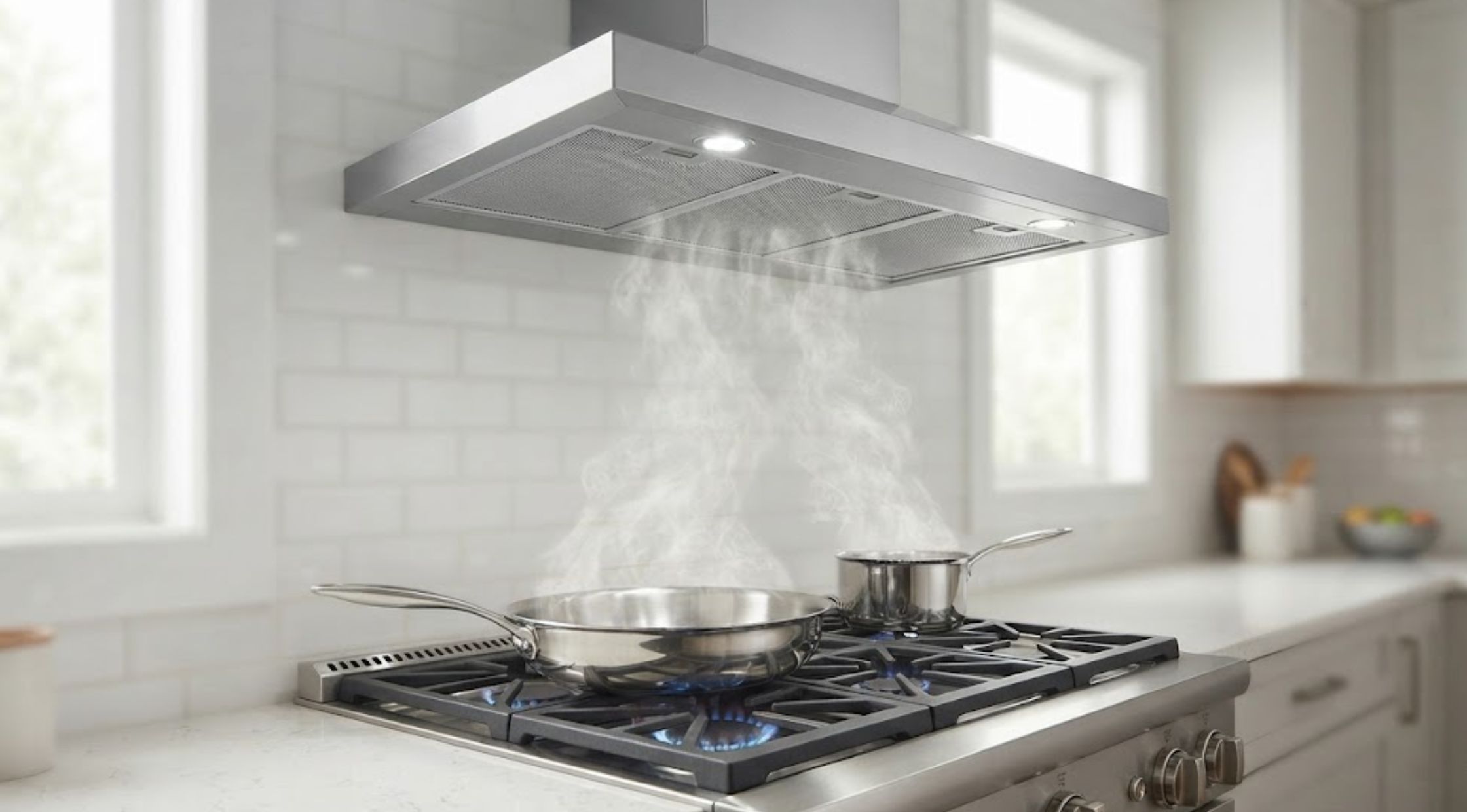
Cooking should make your home feel warm and inviting, not leave behind smoke, grease, strong odors, and stale air. If your kitchen still smells like last night’s dinner hours after cooking, or greasy residue keeps appearing on cabinets and walls, your ventilation system may not be doing enough.
Choosing the best range hood can make a noticeable difference. A well-designed hood helps remove airborne grease, steam, heat, and cooking odors before they spread throughout your home. However, with so many sizes, airflow ratings, filter types, and installation options available, finding the right model can feel more complicated than expected.
This blog explains what causes common kitchen ventilation problems, what features matter most, and how to choose a range hood for a gas stove that supports a cleaner and more comfortable cooking space.
Why Kitchen Air Can Become Uncomfortable So Quickly
Many homeowners assume that opening a window or turning on a ceiling fan is enough to clear cooking fumes. While these methods may improve airflow slightly, they do not directly capture grease, smoke, and steam at the source.
Cooking at high temperatures releases tiny particles and moisture into the air. Frying, searing, grilling, and simmering can create stronger odors and more airborne grease. When these particles are not removed efficiently, they may settle on kitchen surfaces or travel into nearby rooms.
A weak or poorly sized range hood may lead to problems such as:
- Lingering food odors
- Greasy cabinets and countertops
- Excess heat while cooking
- Excess moisture around the cooking area
- Smoke that spreads through the home
- A kitchen that feels stuffy or uncomfortable
These issues can become even more noticeable when using a gas cooktop because gas burners produce heat and combustion byproducts in addition to normal cooking smoke and steam.
Why a Range Hood for a Gas Stove Needs Strong Ventilation
A range hood for a gas stove should be selected based on more than appearance. The hood needs enough airflow to capture heat, steam, grease, and cooking fumes without becoming excessively loud.
One important measurement is airflow, commonly expressed in cubic feet per minute, or CFM. A higher CFM rating generally means the hood can move more air, but more power is not always automatically better. The ideal airflow depends on factors such as:
- The size and output of your gas cooktop
- How often you cook
- Whether you regularly fry or use high heat
- The size of your kitchen
- The length and design of the ductwork
- Whether the hood vents outdoors or recirculates air
A large kitchen with a powerful gas range may require stronger ventilation than a small kitchen used mainly for light cooking.
Ducted vs. Ductless Range Hoods
A ducted range hood sends cooking air outside through a ventilation duct. This option is often effective because it removes heat, moisture, odors, and airborne particles from the kitchen.
A ductless or recirculating hood filters the air and returns it to the room. These systems can be useful when exterior ducting is not possible, but their performance depends heavily on the quality and maintenance of the filters.
When comparing options, consider your kitchen layout and installation possibilities before focusing only on style.
Common Mistakes When Choosing the Best Range Hood
Many buyers choose a hood based only on its appearance or price. Although design matters, several practical details can affect long-term satisfaction.
Choosing the Wrong Size
The best range hood should provide adequate coverage over the cooking surface. A hood that is too narrow may allow smoke and grease to escape around the sides.
In many kitchens, choosing a hood that is at least as wide as the cooktop is a practical starting point. Depending on the layout and cooking habits, a slightly wider model may provide better capture coverage.
Ignoring Noise Levels
A powerful fan is useful, but excessive noise can make cooking less enjoyable. Look for a model that balances airflow with comfortable sound levels.
Multiple fan speeds can also help. Lower settings may work well for simmering, while higher settings can be used for frying or high-heat cooking.
Forgetting About Filter Maintenance
Filters collect grease and other airborne particles. Over time, dirty filters may reduce performance and make cleaning more difficult.
Before purchasing, check whether the filters are removable, washable, and easy to replace. Simple maintenance can help keep a range hood for a gas stove working efficiently.
Practical Ways to Improve Kitchen Ventilation
Even a high-quality range hood performs best when used correctly. A few simple habits can improve results.
First, turn on the hood shortly before cooking. This allows airflow to begin before steam and smoke build up.
Second, use the appropriate fan speed. Low heat may only require a gentle setting, while frying or searing may need stronger ventilation.
Third, keep filters clean. Follow the manufacturer’s care instructions and inspect filters regularly.
Finally, use suitable cookware and avoid allowing smoke to build up before turning on the fan. Good cooking habits and effective ventilation work together.
When a Premium Range Hood May Be Worth Considering
If you cook frequently, use a gas range often, or want a more refined kitchen experience, upgrading to a higher-quality ventilation system may offer meaningful benefits.
Premium options may provide stronger airflow, improved filtration, quieter operation, multiple fan settings, modern controls, and a more polished appearance. These features can make daily cooking more comfortable while helping reduce grease and odors.
Arspura offers range hood options designed to combine practical ventilation with modern kitchen styling. Rather than treating ventilation as an afterthought, a well-designed system can become an important part of a functional kitchen.
When comparing models from Arspura, consider the hood’s size, airflow capacity, installation requirements, filter design, and noise level. The right choice should fit both your cooking habits and your kitchen layout.
Benefits of Upgrading to a Better Range Hood
Replacing an outdated or underperforming hood can improve more than just kitchen air. The benefits may include:
A Fresher-Smelling Home
Better ventilation can help capture cooking odors before they travel into living rooms, bedrooms, or other areas.
Less Grease on Kitchen Surfaces
Effective airflow and filtration may reduce the amount of airborne grease that settles on cabinets, walls, and countertops.
More Comfortable Cooking
Removing excess heat and steam can make the cooking area feel less stuffy, especially during longer meal preparation.
Easier Kitchen Maintenance
When fewer grease particles spread around the room, regular cleaning may become more manageable.
A More Finished Kitchen Design
A stylish hood can also act as a visual focal point. Modern finishes and streamlined designs can complement both contemporary and traditional kitchens.
For homeowners looking for a balance between performance and appearance, Arspura can be a useful option to explore as part of a kitchen upgrade.
How to Make the Final Choice
Before buying, measure your cooktop and available installation space. Then review your cooking habits, ventilation setup, and preferred features.
Ask yourself:
- Do I need ducted or ductless ventilation?
- How much airflow does my cooking style require?
- Will the hood provide enough coverage?
- Are the filters easy to clean?
- Is the noise level comfortable?
- Does the design suit my kitchen?
- Will the installation work with my existing layout?
The best range hood is not necessarily the most expensive or the most powerful model. It is the one that provides suitable coverage, reliable ventilation, manageable maintenance, and a comfortable cooking experience.
Conclusion: Choose a Range Hood That Works for Your Kitchen
A kitchen should be a place where you can cook comfortably without worrying about lingering odors, excessive smoke, or greasy surfaces. Choosing the right range hood for a gas stove can help create a fresher and more enjoyable environment while supporting easier kitchen maintenance.
Focus on practical factors such as size, airflow, filtration, noise level, and installation. If you want stronger performance and a more polished design, exploring options from Arspura may help you find a solution that fits your kitchen and cooking routine.
A thoughtful upgrade can make everyday cooking feel cleaner, quieter, and more comfortable without turning your kitchen into a complicated project.